
A fleet is two or more trucks managed together, and most fleet insurance policies begin at five or more vehicles. For a moving company, though, the right number of trucks depends less on hitting a fixed count and more on your monthly move volume and how fully each truck is used. The goal isn’t the biggest fleet — it’s the number of trucks that keeps crews working and jobs covered without paying for vehicles that sit idle.
Wasting money on idle trucks or losing jobs because you don’t have enough — both hurt your business. If you run a small or medium-sized moving company, you have to find the balance between fleet size and demand. Too few trucks mean missed opportunities; too many drive up cost. Many movers lean on rented trucks, but is that the best long-term strategy? Below, we define what a fleet actually is, show how to calculate how many trucks in a fleet your operation needs, and explain how a moving CRM helps you manage demand without overspending.
What is fleet size, and how many trucks make a fleet?
Fleet size is simply the number of vehicles a company operates and manages together. The term “fleet” starts at two or more trucks — the moment you run more than one truck as part of your operation, you have a fleet. From there, the number matters for how you insure, maintain, and dispatch those vehicles.
Most classifications group fleets into three tiers, and where you land changes how you buy insurance and manage the trucks day to day:
| Fleet size | Number of trucks | What it means for a moving company |
|---|---|---|
| Small fleet | 2–10 | Most local movers sit here; qualifies for small-fleet insurance, usually from 5+ vehicles |
| Medium fleet | 11–50 | Multi-crew and often multi-branch; needs systemized dispatch and reporting |
| Large fleet | 51+ | Bulk insurance and maintenance discounts; typically a dedicated fleet-management team |
A single truck is not yet a fleet — it’s an owner-operator setup. The practical threshold most owners care about is five trucks, because that’s where a dedicated fleet insurance policy usually becomes available, often at a lower per-vehicle rate than insuring trucks individually.
How many trucks does a moving company actually need?
The honest answer isn’t a number you copy from another company — it’s a calculation based on your own demand. A simple way to size your fleet:
Trucks needed = moves per month ÷ (working days per month × moves per truck per day)
Here’s an illustrative example (use your own numbers): a company doing 120 moves per month, working 24 days a month, with each truck handling 2 moves per day, needs 120 ÷ (24 × 2) = 2.5, rounded up to 3 trucks. If your average job is a longer local move at one per truck per day, the same volume would need 5 trucks instead.
Two factors shift that result. First, utilization — a truck that runs most working days earns its keep; one that sits idle three days a week is a cost, not an asset. Second, seasonality — sizing your permanent fleet for your absolute peak means overpaying for eleven months to cover one. It’s usually smarter to size for your steady baseline and cover the peak with rentals or subcontractors.
What size moving trucks do you need?
Having the right number of trucks only helps if they’re the right size for the jobs you book. A fleet of three 26-footers is wrong for a company that mostly moves studios and one-bedrooms, and a fleet of cargo vans can’t touch a four-bedroom house move. Matching truck size to typical job size is part of right-sizing your fleet.
| Truck size | Capacity | Best for |
|---|---|---|
| Cargo van | ~245 cu ft | Studio or dorm, small deliveries |
| 10–12 ft | ~380–450 cu ft | One room / small one-bedroom |
| 15–17 ft | ~760 cu ft | Two-bedroom apartment |
| 20 ft | ~1,000 cu ft | Two- to three-bedroom home |
| 26 ft | ~1,700 cu ft | Four-plus-bedroom home |
Weight matters as much as volume: smaller trucks carry roughly 3,000–3,500 lbs, while a 26-footer handles up to about 10,000 lbs. A mixed fleet — a couple of mid-size trucks for apartments and one or two 26-footers for houses — usually covers more job types than the same number of identical trucks.
Understanding demand for your moving business
Smaller moving companies face a specific challenge with fleet management: demand changes with the seasons, so it’s hard to predict when extra trucks will be necessary. Limited budgets mean keeping underused trucks isn’t an option, yet last-minute job requests can force you to rent at high prices. Without a clear strategy, you either overspend on trucks you don’t need or lose business because none are available.
Forecasting demand with limited resources starts with tracking past bookings to spot your peak seasons and slower months. Analyzing job locations tells you whether most moves are local, long-distance, or concentrated in specific neighborhoods. Offering flexible scheduling — evening or weekend moves — lets you get more out of each truck and reduce downtime.
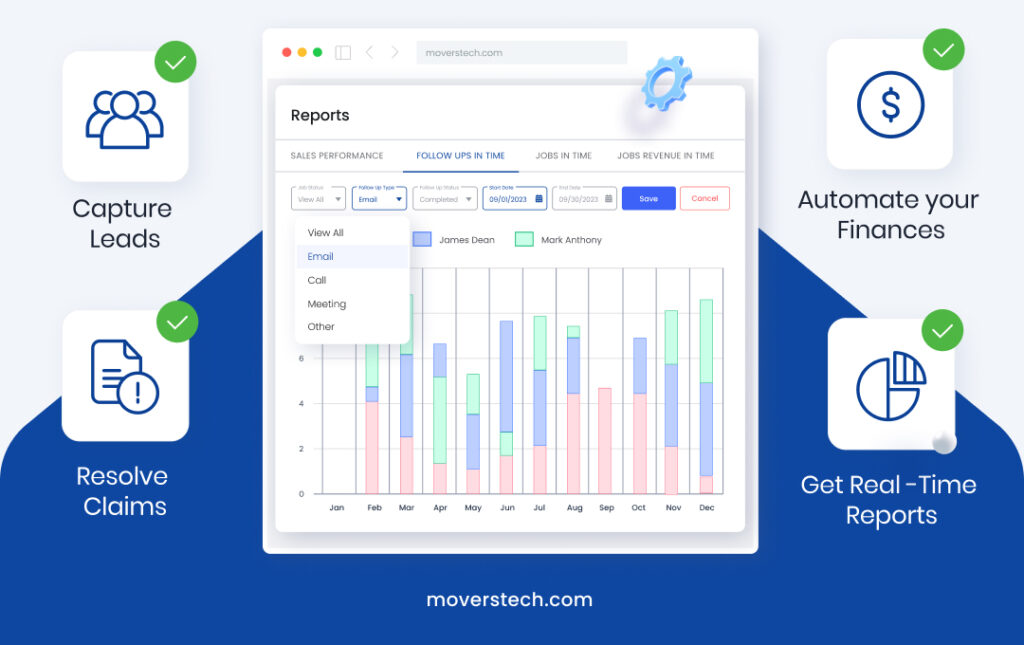
A CRM with job tracking makes this planning far easier by showing when demand spikes. With that data, you can schedule trucks more efficiently and avoid overbooking, and automated booking reminders cut down on no-shows so trucks aren’t left sitting on days you thought were full.
Should you own or rent moving trucks?
Whether to own or rent depends on your business model, workload, and budget. Each option has a place; the right choice comes down to how often you need the trucks and how much control you want over operations. You should own moving trucks if:
- You have consistent bookings and can keep each truck in use.
- You do many local moves where a truck is needed daily.
- You want branding and full control over maintenance.
Renting makes more sense if:
- Your business is seasonal with fluctuating demand.
- You do occasional long-distance moves and don’t want idle trucks.
- You’re just starting out and need flexibility on cost.
Owning gives you control and visibility; renting helps you handle unpredictable demand without major financial risk. The steadier your workload, the more ownership pays off.
How to avoid overbooking without buying more trucks
If you haven’t worked out the right number of trucks for your demand, overbooking is usually the first symptom. It damages your reputation fast: customers get frustrated when you have more jobs than trucks, and you end up turning work away. Last-minute shortages get worse when rental options are limited, and poor scheduling adds empty return trips that waste fuel.
Getting more out of your current fleet starts with better scheduling. If two smaller moves are in the same area, combining them into one trip cuts wasted time. Mid-week discounts spread demand beyond weekends. Partnering with other local movers for truck-sharing during peak times covers extra demand without buying vehicles.
A CRM with job scheduling tools prevents double-booking and assigns trucks efficiently. By tracking availability in real time, you catch conflicts early and adjust before they become a problem — one of our most practical tips for handling cancellations. Automated follow-ups confirm bookings and reduce the last-minute changes that throw off your whole schedule.
Managing costs when expanding your fleet
Expanding a fleet costs more than the price of a new truck. Maintenance and repairs add up, and even one truck out of service can disrupt your whole schedule. Insurance rises with every vehicle, and fuel becomes a major line item if routes aren’t planned well. Without careful budgeting, a bigger fleet can drain profit instead of building it.
One way to grow without overspending is leasing instead of buying — lower upfront cost and the flexibility to scale up or down. Offering storage services brings in recurring income that helps cover fleet costs through slow seasons. Route optimization keeps fuel spend down by cutting unnecessary miles.
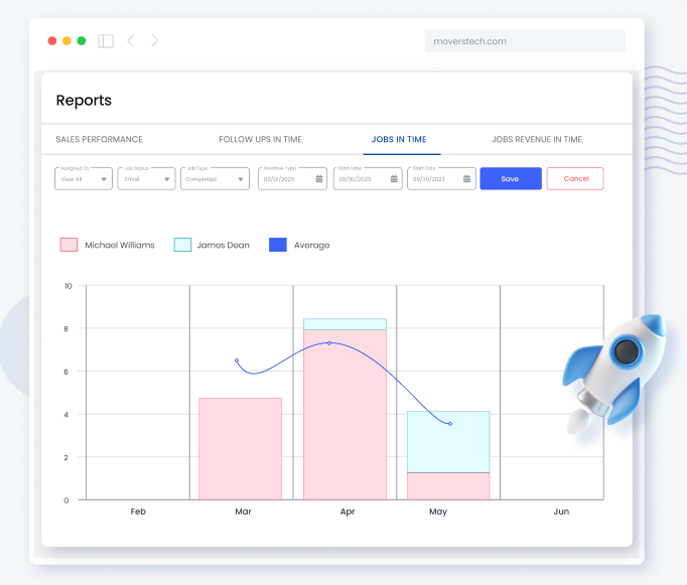
A CRM with invoice tracking keeps you on top of payments so you have the cash flow to support expansion, and detailed moving company reports show you where the money actually goes before you commit to another truck.
Right-sizing your fleet during peak season
Peak season can overwhelm a small moving business, but you rarely need to buy trucks to get through it. Instead of turning away jobs, manage the surge:
- Rent trucks short-term for peak months instead of buying.
- Use subcontractors for overflow jobs to avoid overbooking.
- Apply premium pricing for last-minute moves.
You can also get more out of a small fleet:
- Schedule moves by size, using larger trucks for multi-stop jobs.
- Encourage flexible move dates to spread demand more evenly.
- Offer packing as a separate service to reduce truck-space needs and speed up jobs.
A CRM with job tracking shows truck capacity in real time, so you know the moment you’re fully booked, and automated dispatching assigns crews faster, cutting idle time. Planning ahead beats buying trucks you’ll only need for eight weeks.
How a moving CRM helps you right-size your fleet
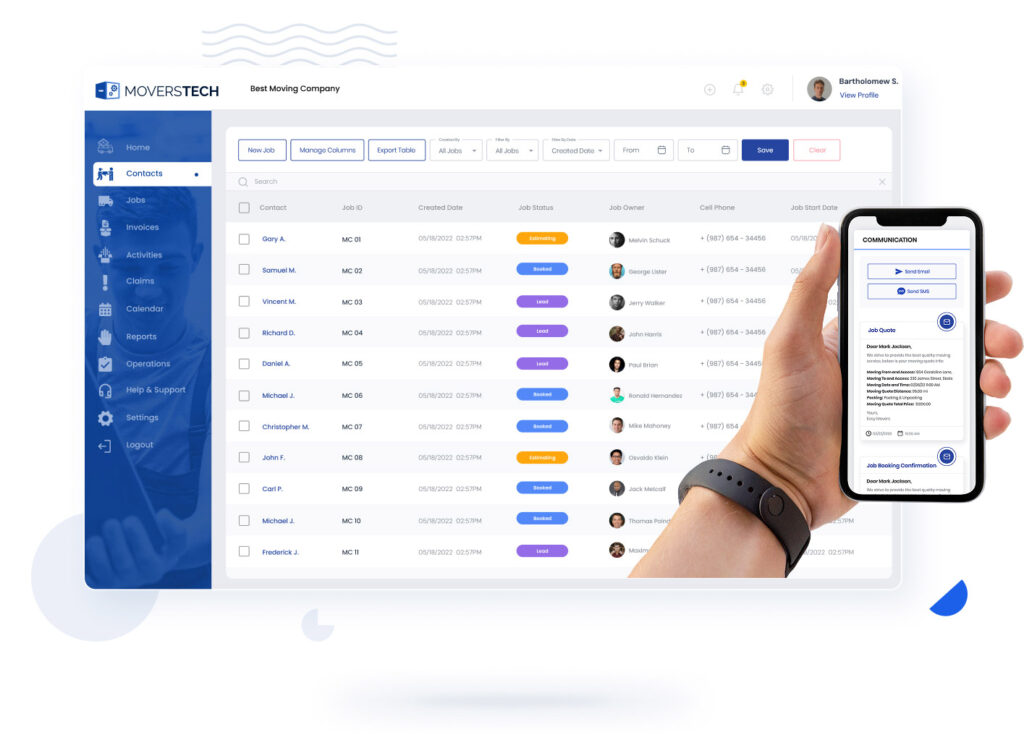
Right-sizing a fleet is a data problem before it’s a purchasing decision, and that’s where a purpose-built system earns its place. MoversTech CRM ties booking, dispatch, and reporting together, so you can see truck utilization and demand patterns instead of guessing at them. Companies running more than one location can apply this per branch with multi-branch management, keeping each location’s trucks and workflows separate while tracking performance across all of them in one view.
That visibility is what lets you hold the right number of trucks: enough to cover steady demand, with a clear signal when real growth — not just a seasonal spike — justifies adding a vehicle. Federal requirements like registration and a USDOT number apply once you’re operating commercial trucks, so growth planning should account for Federal Motor Carrier rules alongside the operational math.
Work smarter, not bigger
Getting the right number of trucks isn’t about owning the most — it’s about using what you have well. Own, rent, and schedule strategically to meet demand without overspending. Track your busiest seasons, optimize routes, and let a moving CRM manage jobs so every truck stays productive. With MoversTech CRM handling the data behind your fleet, you can scale your moving company on your terms while keeping costs under control. Ready to see it on your own numbers? Book a demo.
Frequently Asked Questions
How many trucks make a fleet?

A fleet is two or more trucks operated and managed together for business. A single truck is an owner-operator setup, not a fleet. In practice, five or more trucks is the point where a dedicated fleet insurance policy usually becomes available, often at a lower per-vehicle rate.
What is fleet size for a moving company?
Fleet size is the number of trucks a moving company runs and manages together. Most movers operate a small fleet of 2–10 trucks; medium fleets run 11–50, and large fleets 51 or more. The right size depends on monthly move volume and how fully each truck is used, not on a fixed target number.
How many trucks does a small moving company need?
Most small moving companies need 2 to 5 trucks. A quick estimate: divide your moves per month by your working days per month times the moves each truck handles per day. A company doing 120 moves a month, 24 working days, at 2 moves per truck per day needs about 3 trucks. Cover seasonal peaks with rentals rather than buying for your busiest weeks.
What size moving truck do I need for a two- or three-bedroom home?
A 15–17 ft truck (about 760 cu ft) fits most two-bedroom apartments, while a 20 ft truck (about 1,000 cu ft) suits a two- to three-bedroom home. For four or more bedrooms, use a 26 ft truck (about 1,700 cu ft). Choosing the right size avoids both wasted space and costly second trips.
Is it better to own or rent moving trucks?
Own trucks when you have consistent daily bookings and want control over branding and maintenance. Rent when demand is seasonal, long-distance jobs are occasional, or you're just starting and need to keep costs flexible. Many movers do both: own enough trucks to cover steady demand and rent for peak season.
